
Last Updated: November 14, 2026
Quick Summary
To clean wood carriage garage doors safely, brush off dust and cobwebs first, then wash gently with a damp cloth and mild soap, not a pressure washer. Rinse with a gentle hose spray from the top down, then dry promptly. This protects the clean wood carriage finish from moisture and damage.
- Brush away dust and cobwebs dry before any water touches the door.
- Never use a pressure washer, which can force water into joints and under the finish.
- Wring the cloth until it is damp rather than dripping to limit water entry.
- Work from top to bottom and rinse with a gentle hose spray, keeping water off hinges.
- Dry the door promptly to prevent mold, mildew, and finish damage.
Table of Contents
- Why Wood Carriage Garage Doors Need Gentle, Finish-Aware Cleaning
- What You’ll Need: Cleaning Supplies and Tools
- Step-by-Step: How to Clean a Wood Carriage Garage Door
- How to Remove Grease, Road Grime, and Stubborn Stains from Wood Doors
- How Often to Clean a Wood Garage Door
- Wood Garage Door Maintenance Checklist and Mistakes to Avoid
- Scheduling Your Next Inspection or Professional Tune-Up with Image Doors
- Frequently Asked Questions
Why Wood Carriage Garage Doors Need Gentle, Finish-Aware Cleaning
A wood carriage garage door looks beautiful, but it needs careful care to stay that way, so know the right way to tend a clean wood carriage door. Authentic carriage house doors are built with handcrafted detail, and harsh cleaning can cause real damage to that finish.
Wood is a natural material. It swells when wet, dries out in heat, and weathers over time. The protective finish, whether stain, paint, or sealant, is what shields the wood from moisture and sun. Clean the door with that finish in mind, and the door will last longer and look better.
Dirt, road grime, and cobwebs build up quickly on a garage door at ground level. Cleaning them off gently keeps a clean wood carriage surface healthy and stops mold and mildew from taking hold in damp corners.
What You’ll Need: Cleaning Supplies and Tools
Gather the right supplies before you start. Using the right tools protects the finish and makes the job faster.
- A bucket of warm water
- A mild detergent or household soap (avoid harsh degreasers)
- A soft cloth or sponge
- A soft-bristle brush for recessed panels and trim
- A garden hose with a gentle spray setting
- Two clean, dry cloths for drying
Choose a cleaner labeled safe for wood. The best cleaner for wood doors is usually a pH-neutral product made for exterior wood or a few drops of mild dish soap in water. Skip bleach, ammonia, and abrasive scrubbers. These can discolor stain, dull paint, and raise the grain of the wood.
Step-by-Step: How to Clean a Wood Carriage Garage Door
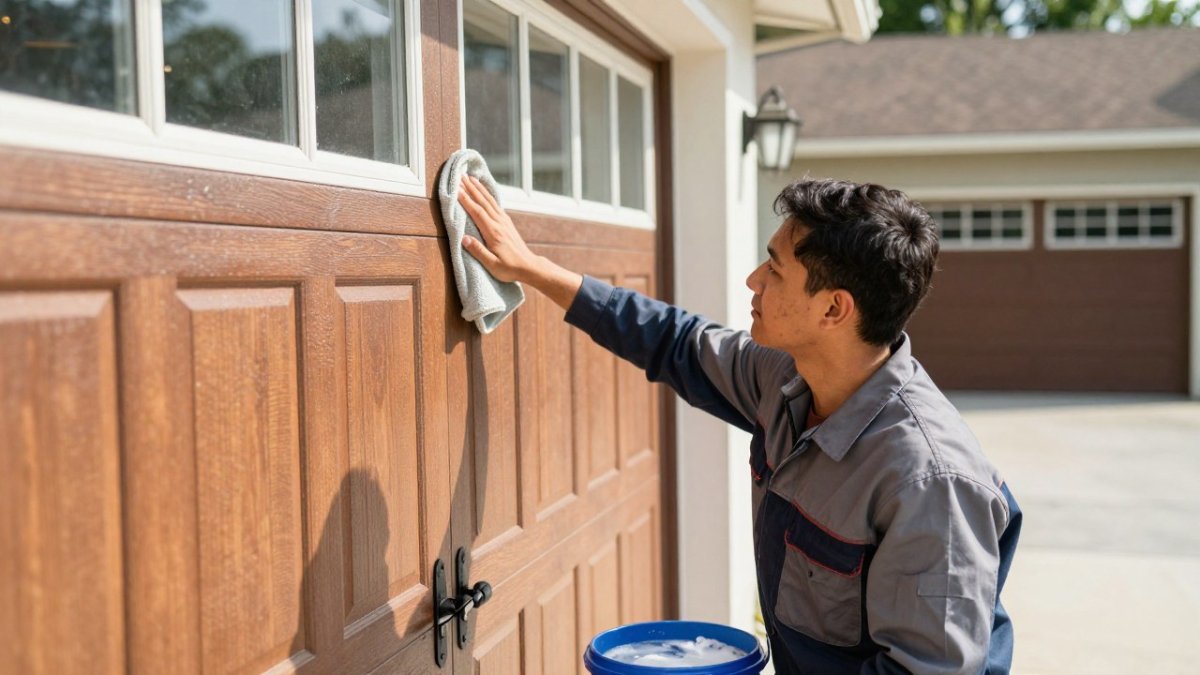
Follow these steps in order. Work on a cool, shaded part of the day so the soap does not dry on the wood. A common pattern among experienced finishers is to clean from the top down and from the least soiled areas to the dirtiest, so grime never gets dragged back onto clean panels. You can also see finished custom stained wood carriage house doors to get a sense of what a well-kept door looks like.
Preparing the Door and Clearing Dust, Dirt, and Cobwebs
Start by closing the door fully and making sure the area around it is clear. Use a soft brush or dry cloth to remove loose dust, dirt, and cobwebs from the panels, grooves, and hardware. Pay attention to the corners and bottom edge, where grit collects. Knock down cobwebs with a dry brush before any water touches the door; wet cobwebs smear and cling to the finish.
Do not use a pressure washer. High-pressure water can force moisture into the joints and under the finish. A gentle hose spray is enough to rinse away loose debris. Keep the spray moving and angled downward so water runs off the panels rather than pooling in the recessed panels and trim that define carriage-style doors.
Washing the Exterior and Interior Surfaces
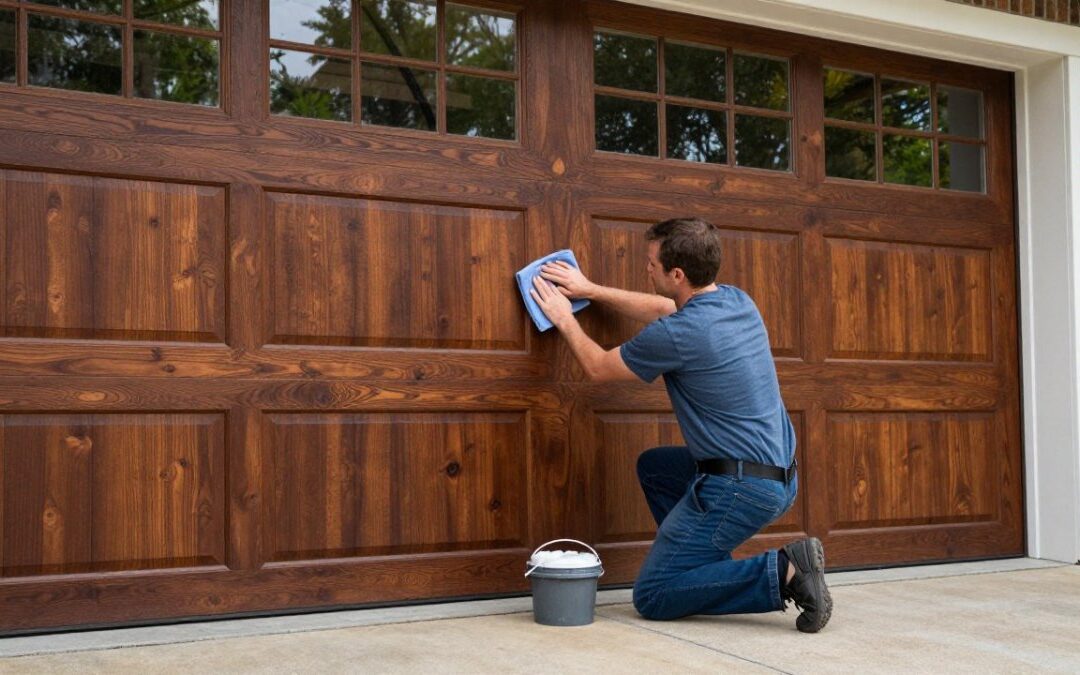
Mix a small amount of mild detergent into a bucket of warm water. Dip the soft cloth or sponge, wring it out until it is damp rather than dripping, and wash the exterior in small sections from top to bottom. Work gently along the grain of the wood. A damp cloth is the key control: excess water is what finds its way into joints, hardware holes, and the bottom edge of the door.
Clean the interior side the same way. Interior surfaces collect dust and grime from the garage, and they need care too. Rinse the cloth often so you are not spreading dirt back onto the door. On carriage-style doors, spend extra time on the decorative trim, recessed panels, and applied moldings, where dirt collects in the corners and along the edges where water can sit.
Rinsing Without Soaking the Wood
Rinse with a garden hose on a gentle spray setting, again working from the top down. Keep the stream moving and direct it so water sheets off the surface rather than blasting into seams. Do not aim water at hinges, handles, locks, or the bottom edge of the door. If your door has electrical components such as a keypad or opener sensor, keep the hose away from them entirely.
Watch out: Never let rinse water stand in the recessed panels or along the bottom rail. Before cleaning, you may want to check for common garage installation mistakes that affect door longevity and finish. Standing water is the most common way a routine wash turns into swelling, finish failure, or water intrusion at the joints.
Drying and Protecting Hardware
Dry the door promptly with clean, dry cloths, starting at the top and working down. Pay special attention to the recessed panels, the bottom edge, and the areas around hardware, where water hides. Leaving the door wet overnight invites mold, mildew, and finish damage.
After drying, wipe metal hardware with a dry cloth and check that hinges, handles, and decorative pieces are tight. Keep water away from springs, cables, and pinch points, and never reach into the door’s moving parts while cleaning. If the door must be moved during cleaning, close it fully first and keep hands clear of the tracks and hinges.
The cleaning process comes down to a few key steps, each with its own care points.
| Step | What to do | Key care point |
|---|---|---|
| Prepare | Brush off dust, dirt and cobwebs | Brush cobwebs dry before water |
| Wash | Wipe with damp cloth and mild soap | Wring cloth until only damp |
| Rinse | Gently hose from top down | Keep spray off hinges and bottom edge |
| Dry | Wipe dry with clean cloths | Dry promptly to avoid mold |
How to Remove Grease, Road Grime, and Stubborn Stains from Wood Doors
Grease and road grime stick to the lower panels, especially near driveways. Apply the detergent solution to the stain and let it sit for a few minutes. Then wipe gently with a soft cloth.
The right approach depends on the finish, and this is where generic cleaning advice falls short. Most practitioners treat each finish differently:
- Painted doors: Use the mildest detergent solution and a soft cloth. Avoid abrasive pads and stiff brushes, which dull the sheen and leave scratch marks that show under direct light. Touch up scuffs only after the surface is clean and dry.
- Stained doors: Work along the grain and avoid letting soapy water sit, since prolonged moisture can lift stain and leave a blotchy appearance. Rinse and dry promptly.
- Sealed or varnished doors: Wipe with a damp cloth and mild soap, then dry immediately. Solvent-based cleaners can cloud or soften the clear coat, so stick to pH-neutral products.
- Unfinished or rough-sawn wood: These surfaces trap dirt in the grain and are the most vulnerable to water. Use a dry brush first, then a barely damp cloth, and dry immediately. Avoid soaking, and plan to seal the wood once it is clean and dry.
Mold and mildew often appear in shaded, damp areas. Wipe the spot with a solution of mild soap and water, then rinse and dry.
Watch out: Never use bleach, ammonia, or a harsh chemical cleaner on wood doors. These can discolor stain, damage wood fibers, and the damage may not be reversible.
If a stain will not lift after two gentle attempts, the problem is likely below the surface. In that case, cleaning is not the answer; the door may need refinishing, repair, or a professional assessment.
How Often to Clean a Wood Garage Door
Most homeowners clean a wood garage door every few months, and more often if the door faces a busy road or sits under trees. A light seasonal wipe-down keeps dirt from building up. A deeper wash once or twice a year helps the finish last.
Clean sooner after heavy rain, dust storms, or leaf fall. Early cleaning is easier and gentler on the wood than waiting for grime to set.
Wood Garage Door Maintenance Checklist and Mistakes to Avoid
Use this checklist to keep your door in good shape between cleanings:
- Wipe down the door once a month
- Check the finish for fading, cracking, or bare spots
- Look for soft wood or swelling near the bottom edge
- Inspect hinges, handles, and hardware for loose screws
- Test the door’s opening and closing for smooth movement
- Dry the surface after every deep cleaning
Avoid these common mistakes:
- Using a pressure washer on the panels
- Scrubbing hard with a stiff brush
- Letting the door stay wet overnight
- Using bleach, ammonia, or abrasive pads
- Ignoring small cracks in the finish, which let moisture in
After cleaning, look closely at the surface. If you see peeling finish, deep cracks, or soft spots, the door may need refinishing or repair rather than more cleaning. Catching these problems early is often cheaper than replacing damaged panels later.
Scheduling Your Next Inspection or Professional Tune-Up with Image Doors
Regular cleaning keeps your door looking its best, but a professional inspection can catch problems you might miss. Image Doors works with authentic carriage house doors and can contact you for a quote on a professional inspection. Atlanta homeowners can also explore professional carriage house door installation in Atlanta for options on a new door. You can also review its premium garage door replacement services in Atlanta if a tune-up reveals a door that needs more than repair.
Pricing depends on the door’s size, style, and condition, so contact Image Doors directly for a quote. If you are ready to protect your investment, call Image Doors today and schedule your next inspection.
Frequently Asked Questions
How do you clean wood carriage garage doors without damaging the finish?
Use a mild detergent or household soap mixed with warm water, and apply it with a soft cloth or sponge rather than a stiff brush. Work in small sections, scrub gently along the grain, and rinse with a garden hose on a low setting so water does not sit in the wood. Test any cleaner on a hidden spot first, and avoid harsh chemicals, bleach, or abrasive pads that can strip or dull the protective stain, paint, or sealant. Dry the surface with a clean cloth after rinsing.
Can you use a pressure washer on a wood garage door?
It is generally not recommended. High-pressure water can raise wood grain, force moisture into joints and seams, and strip the protective finish, leaving the door more vulnerable to weathering and rot. If you must use one, choose the lowest pressure setting, keep a wide spray pattern, stay well back from the surface, and never aim directly at the edges or hardware. Hand washing with a soft cloth and a garden hose is the safer choice for most carriage-style doors.
How often should you clean a wood garage door?
Most homeowners benefit from a gentle wash two to four times a year, with extra attention after heavy rain, pollen season, or winter road salt exposure. Quick dusting and cobweb removal can happen monthly. Doors in shady, damp, or tree-lined locations may need cleaning more often to prevent mold and mildew. Pricing for professional maintenance depends on the door size, finish condition, and scope of work, so contact Image Doors for a current quote.
How do you restore a weathered wood garage door?
Start by cleaning the door thoroughly to remove dirt, mildew, and loose finish. Let it dry completely, then inspect for cracked or raised areas, soft wood, and failed seams. Minor surface wear may be addressed by sanding lightly and applying a compatible stain, paint, or sealant. Severe rot, warping, or hardware problems often call for repair or replacement, and a professional inspection can help you decide which approach makes sense.

Recent Comments